 Supporting The Fight

 CALL US NOW
 EMAIL US NOW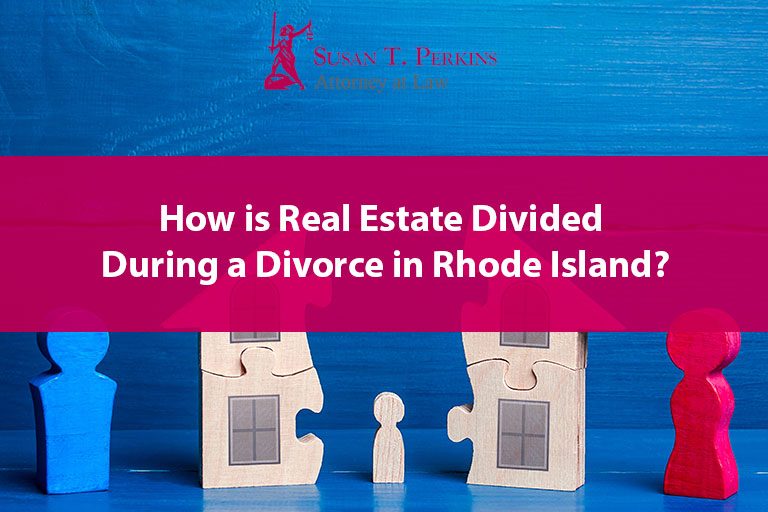
In certain cases, getting divorced is your only option. Recent data shows divorce rates have declined in recent decades, but 39% of marriages still end this way. But knowing you aren’t alone doesn’t make the process easier to navigate.
Problems dividing real estate in a divorce in Rhode Island are incredibly common. As an experienced and knowledgeable RI divorce attorney, the Law Offices of Susan T. Perkins Esq. have helped clients through difficult divorces for more than 20 years.
That’s why we put together this complete guide on navigating problems dividing real estate during a divorce.
Keep reading to learn how real estate is divided in RI, common problems to look out for, and how to resolve these issues as effectively as possible.
How is Real Estate Divided During a Divorce in Rhode Island?
During a divorce in Rhode Island, real estate is divided via what’s called “equitable distribution.” Equitable distribution basically says that your marriage is an economic partnership, and therefore both parties get a fair share of all marital property.
So, what’s marital property? This refers to anything acquired, purchased, or shared during the course of your marriage. If either of you owned property prior to getting married and you’ve established that property wasn’t intended to be shared, it isn’t marital property.
That means it won’t fall under the rules of equitable distribution.
But the key here is establishing that the property in question isn’t marital property. A prenuptial agreement is the most common way of doing so. If you didn’t put together a prenup, though, you aren’t out of luck.
If you took clear steps to keep the property separate, such as:
- Keeping records like titles, deeds, and receipts in your name to demonstrate ownership
- Using your own accounts (rather than a joint account) to make purchases for that property
- Making sure the funds used for property expenses are non-marital funds
Then you still might be able to keep that property out of the equitable distribution process. You should also know that typically, courts in Rhode Island don’t consider property acquired pre-marriage as marital property. That said, any increase in the property’s value may be considered as such.
Factors Considered While Dividing Real Estate in a Divorce in Rhode Island
According to Rhode Island General Laws section 15-5-16.1, the court considers these factors to determine the value and nature of any real estate that’s going to be divided:
- How long your marriage was
- Your and your spouse’s conduct during the marriage
- Any contributions made by either of you towards acquiring, preserving, or value appreciation of the property
- Any contributions or services from either of you as a homemaker
- Your and your spouse’s ages and health
- Income sources and amounts for you and your spouse
- The jobs and employability of you and your spouse
- Opportunities both of you have for future acquisition of income and capital assets
- Contributions from either of you towards training, education, licensing, business, or increasing earnings for the other person
- Whether the custodial parent needs to occupy and/or own the marital residence to support your children’s best interests
- Any wasteful removal or transfer of assets in anticipation of the divorce
- Any other factors the court believes to be appropriate and necessary
The Most Common Problems Dividing Real Estate in a Divorce
Here are the most common issues to look out for:
- Being conservative about ongoing costs. It’s crucial to really think through any future costs of your real estate. Property taxes, upkeep, insurance, and other fees all need to be accounted for. The more accurate your data is, the more fair and balanced your divorce settlement will be.
- Vague terms of sharing. It’s perfectly fine if you and your spouse plan to share a property, or even come to a mutual agreement. But you’ll want to have a very clear schedule and arrangement of who gets to use it when. Don’t forget to include terms related to clean-up and maintenance.
- Not thinking through ramifications. Getting divorced and divvying up your shared real estate is emotionally draining. It’s normal to want to move through these decisions as quickly as possible. Just think about what you’re really giving up. If your spouse gets 100% of a property, they can tear it down, remodel it, sell it, or move their new family into it. Be prepared for these harsh realities.
- Disputes over investment properties. If you both want a share of income-generating property, outline what that’ll look like. Just like other shared properties, things like repairs, upkeep, operation, maintenance, and the division of income need to be addressed.
How Does the Court Determine the Value of a Piece of Real Estate in a Divorce Case?
Typically, the court determines the value of a piece of real estate in a divorce case based on “fair market value.” The fair market value standard means the price an interested buyer would pay a seller in an open market, rather than in the current market’s supply and demand conditions.
This process is generally used because it offers the fairest outcome for both parties. Especially with the ongoing volatility of the housing market, using the fair market value can reduce potential disputes between you and your spouse.
Can One Spouse Contest the Division of Real Estate in a Divorce Settlement?
Yes, according to Rhode Island General Laws Section 14-1-52, one spouse can contest the division of real estate in a divorce settlement.
But feeling like you didn’t get a fair division isn’t a valid reason on its own. Also, if your divorce was nominal (or agreed upon), you can’t appeal it.
The way you’d contest the division is with an appeal to Rhode Island Supreme Court. If you’ve uncovered new information that wasn’t known previously and this information was originally undiscoverable, you can petition the court for a divorce modification.
Working with a focused and experienced Rhode Island divorce attorney can help prevent issues like this from ever happening in the first place.
Let a Rhode Island Divorce Attorney Guide You Through This Challenging Process
It’s true that the court uses equitable distribution to divide real estate. The thing is, that doesn’t solve problems dividing real estate in a divorce in Rhode Island. The court isn’t going to walk you through the steps of putting this info together.
When you work with a skilled and focused Rhode Island divorce lawyer like Susan T. Perkins, you know your best interests are protected. With over 20 years of successful experience, no detail in your divorce will be overlooked.
We offer 24/7 support and free case evaluations. Call the Rhode Island Divorce Law Offices of Susan T. Perkins Esq. at (401) 324-2990 to learn more about your options and the best path forward.


